
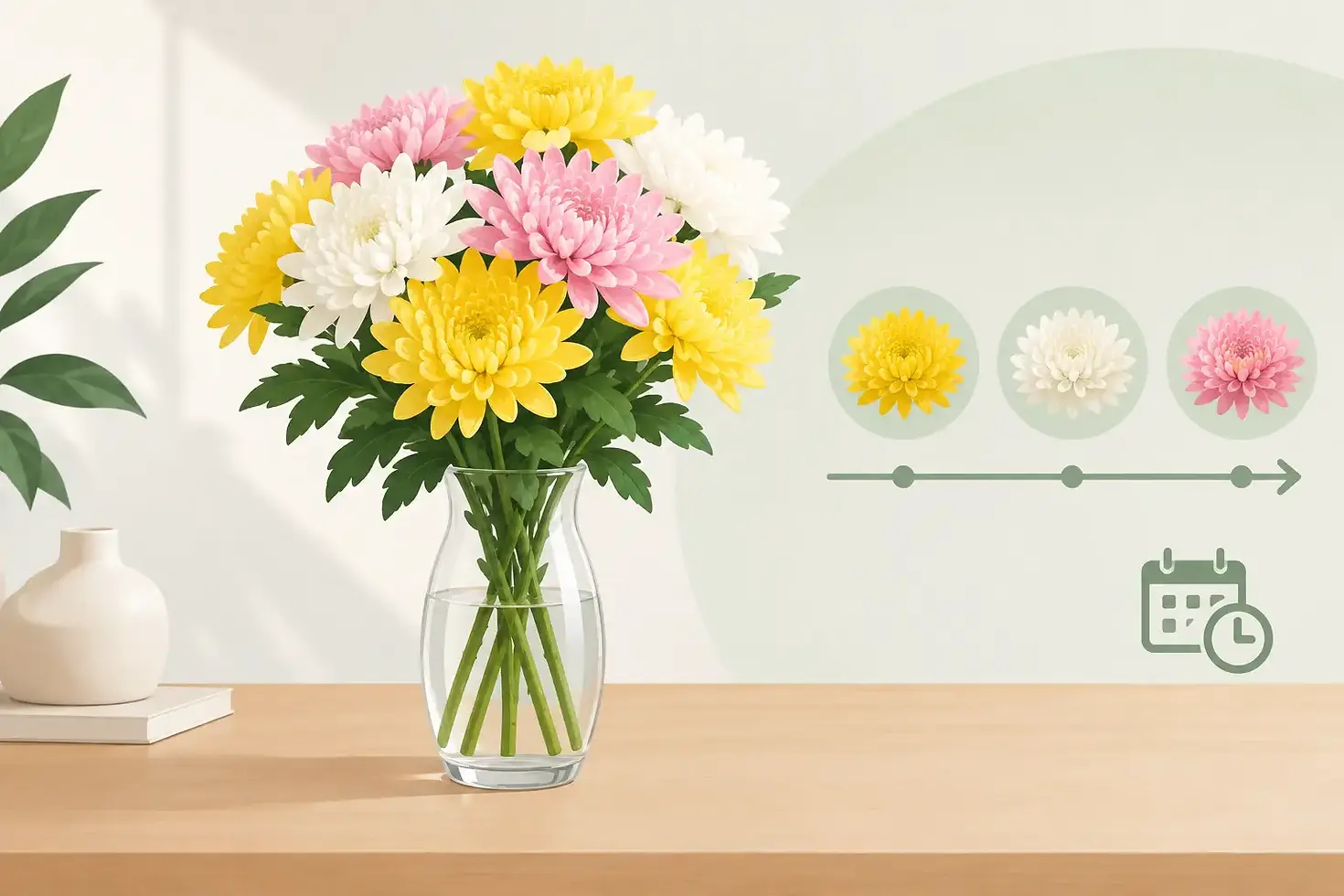
Chrysanthemum Vase Life Review for Buyers
A chrysanthemum vase life review should begin at the point of sale, not when a stem first enters a vase. For importers, wholesalers, and premium floral programs, vase life is the visible result of decisions made across cultivation, harvest, hydration, cold-chain handling, and final care. A bloom that opens with clean color and remains presentable through its intended retail or event window protects both margin and customer confidence.
Chrysanthemums are widely valued for their natural durability, but “long-lasting” is not a useful buying specification on its own. Performance varies by variety, bloom stage, shipment condition, handling discipline, and the environment in which the finished arrangement is displayed. The right review asks whether the flowers arrive with the condition and remaining potential needed for the buyer’s specific program.
Chrysanthemum Vase Life Review: What Buyers Should Measure
The most practical measure is marketable vase life: the number of days a chrysanthemum remains attractive, hydrated, and structurally sound in its intended use. This is more demanding than simply counting days until the flower is fully spent. A stem may remain alive while no longer meeting the visual standard required for a luxury retail bouquet, a hotel lobby, or a high-profile event.
For most professional buyers, the review should consider three stages. The first is condition at arrival, including leaf quality, stem firmness, bloom maturity, and evidence of correct hydration. The second is performance through the distributor or retail holding period. The third is presentation life after the florist or consumer places the flower in a clean vase.
A strong shipment gives the buyer flexibility. It can be received, processed, allocated, and sold without forcing immediate use. That flexibility matters during holiday demand, event-heavy weekends, or any period when timing shifts after product has already been committed.
Arrival condition establishes the baseline
Chrysanthemums should arrive with firm stems, healthy foliage, and flowers that match the agreed maturity standard. Leaves should appear fresh rather than soft, yellowing, or dehydrated. Bloom heads should be well supported by the stem, with no signs of bruising, botrytis, mechanical damage, or compressed petals from packing.
Maturity must be evaluated against the intended channel. A florist preparing immediate event work may prefer a more open bloom with full visual impact. A supermarket program or wholesale customer with several days of downstream handling may need a tighter, properly developed stage that has room to open. Neither choice is automatically better. The concern is whether the maturity at receipt aligns with the planned selling window.
A buyer should also look beyond the top bloom. Lower foliage, secondary flowers, and the stem base often reveal handling issues earlier than the main flower head. Clean, green foliage and a hydrated stem indicate that the product has been managed to preserve its potential after shipment.
A realistic performance window depends on use
Chrysanthemums can provide an extended vase-life opportunity compared with many more delicate cut flowers, but no responsible supplier should promise a single number without defining conditions. Water quality, room temperature, sanitation, light exposure, ethylene sources, and recutting practices all affect the result.
For a premium floral buyer, the relevant question is not simply, “How long will it last?” It is, “How much saleable life remains when this product reaches our operation?” Flowers that look excellent on arrival but decline quickly after allocation create labor pressure, shrink, and avoidable substitutions. Flowers with a dependable remaining life allow teams to merchandise confidently and give customers a better experience.
What Influences Chrysanthemum Vase Life Most
Vase life begins in the greenhouse. Variety selection, nutrition, irrigation, pest management, and harvest timing influence stem strength and bloom quality long before postharvest teams take over. Consistency at farm level is therefore central to consistency in the market.
Harvesting at the appropriate maturity is equally important. Stems cut too early may not develop as expected, while overly mature flowers can lose valuable distribution time. Experienced growers match harvest standards to the variety and the destination market, recognizing that a long-distance export program has different requirements than a local delivery route.
Postharvest hydration is another critical point. Freshly cut chrysanthemums need prompt, correct treatment to maintain water uptake. Once stems become stressed, the impact may not be obvious immediately. A shipment can appear acceptable when unpacked but show bent necks, leaf wilt, or uneven flower opening days later.
Temperature management protects the work completed at the farm. Stable cold-chain conditions slow deterioration and help preserve the flower’s available display life. Temperature breaks do not always produce an immediate visual failure, which is why buyers benefit from reviewing patterns across shipments rather than judging a supplier on one box alone.
Sanitation also deserves attention. Clean buckets, fresh water, sanitized tools, and proper floral-care solutions reduce bacterial blockage in stems. These practices are straightforward, yet they remain among the most common reasons a strong product underperforms after delivery. A vase-life review is most useful when it separates product condition from avoidable downstream handling issues.
A Practical Receiving Protocol for Professional Buyers
A disciplined receiving check does not need to slow the operation. It should provide enough information to identify trends, confirm compliance with specifications, and support productive conversations with the farm or importer when adjustments are needed.
At receipt, inspect a representative sample from more than one box and, when applicable, more than one variety or farm lot. Record arrival temperature, bloom stage, foliage condition, stem length, head size, packaging condition, and any visible damage. Photograph exceptions while product is still in its original packaging.
Then process a small evaluation group under controlled conditions. Recut stems with clean tools, place them in clean containers with appropriate water and floral treatment, and hold them under normal operating conditions. Review them daily for water uptake, leaf yellowing, petal browning, stem integrity, flower opening, and overall appearance.
For meaningful comparisons, keep the protocol consistent. If one shipment is evaluated in a warm design room and another in a temperature-controlled cooler, the results will not tell the buyer much about farm-level performance. Consistent assessment turns anecdotal impressions into useful purchasing information.
Distinguish isolated defects from recurring patterns
No agricultural product is entirely free of variation. A few damaged stems may result from handling at a single point in the supply chain. The more important question is whether a concern appears repeatedly across boxes, varieties, or shipments.
Recurring dehydration, premature leaf decline, or uneven bloom development deserves prompt review. A quality-focused grower should be able to discuss the harvest date, variety, packing approach, and relevant postharvest practices. Direct communication is especially valuable when a buyer’s specifications change due to seasonal promotions, new bouquet recipes, or longer distribution routes.
At Cultivos del Norte, more than 30 years of flower-growing experience informs a simple standard: each stem must be cultivated and handled with the expectations of the final buyer in mind. For chrysanthemums, that means treating visual quality and postharvest potential as connected measures of premium performance.
Using Vase-Life Results in Purchasing Decisions
Vase life should sit alongside variety, color, stem length, fill, pricing, reliability, and fulfillment capability in the buying decision. A slightly lower unit cost can become expensive if flowers require faster turnover, generate more claims, or leave too little usable life for the final customer.
For event specialists, prioritize predictable opening and strength through installation and event days. For premium retail, assess how the flower holds color and freshness at the point of display. For distributors, focus on remaining life after inbound transit and the ability to serve customers with different turnover rates. The same chrysanthemum can be an excellent choice in one program and less suitable in another if the product stage or logistics plan is mismatched.
Buyers also benefit from sharing real performance feedback with suppliers. Specific observations - such as foliage condition after five days, desired bloom openness, or pack-out concerns - are more actionable than a general report that flowers did not last. Strong supply relationships improve when quality expectations are defined clearly and reviewed consistently.
The best chrysanthemum program is not built around the longest claim on paper. It is built around flowers that arrive in the right stage, retain their quality through the actual supply chain, and give the final customer enough time to enjoy the result.


Comments