
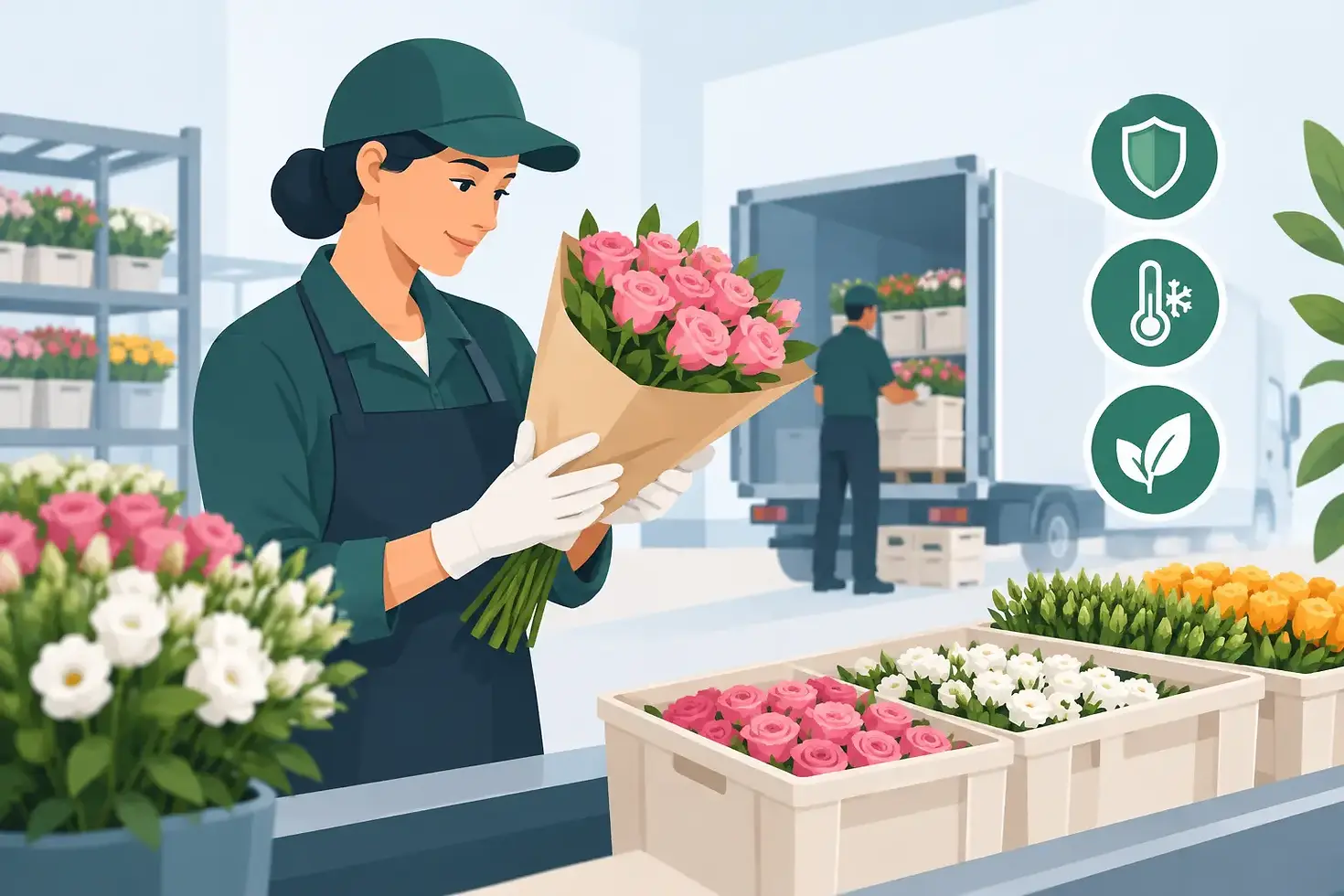
How Flower Wholesalers Protect Premium Quality
A premium rose can leave a farm with strong color, a balanced bloom, and a healthy stem, then lose much of its value before it reaches a florist. For flower wholesalers, the difference often comes down to what happens between harvest, handling, transport, and final delivery. Quality is not preserved by appearance alone. It depends on disciplined decisions across the supply chain.
Professional buyers understand that flowers are perishable inventory with a short window to perform. A shipment that arrives on time but lacks hydration, stem strength, or consistent grading can create waste at the wholesale level and disappointment at the customer level. This is why the most dependable wholesalers build their programs around more than price and availability. They protect quality from farm to final destination.
What Premium Flower Wholesalers Evaluate First
The first question is not simply whether a supplier can offer roses or chrysanthemums. It is whether that supplier can deliver the same standard repeatedly. Premium customers need reliable quality across regular replenishment, major holidays, wedding seasons, and promotional periods. One excellent shipment does not establish a dependable program.
Experienced wholesalers look closely at the farm behind the product. Growing location, variety selection, cultivation practices, post-harvest routines, and the skill of the handling team all affect the flowers that arrive at the destination. Colombia remains an important origin for high-quality cut flowers because its growing conditions support year-round production, but country of origin alone is not a quality guarantee. Farm-level execution remains decisive.
For roses, buyers may evaluate head size, petal formation, stem length, foliage condition, opening stage, and color consistency. For chrysanthemums, they may focus on bloom uniformity, stem strength, vase life, flower count, and the overall presentation of each bunch. The standards should match the intended market. A luxury event florist may require distinctive varieties and carefully controlled opening stages, while a premium retail program may prioritize visual uniformity and dependable shelf performance.
Consistency Matters More Than a Single Perfect Shipment
In premium floral distribution, consistency protects both margins and reputation. When a wholesaler receives flowers that vary from one shipment to the next, teams must spend more time sorting, resolving claims, substituting products, and managing disappointed customers. Those costs are not always visible on an invoice, but they affect profitability quickly.
Reliable farm partners use clear quality specifications and apply them at each stage of preparation. Stems should be graded accurately, bunches should be packed consistently, and product should be inspected before it enters the export chain. Clear specifications also make communication more productive. A buyer can discuss a measurable issue, such as stem length tolerance or bloom stage, rather than relying on broad descriptions of quality.
This does not mean every order will be identical. Flowers are agricultural products, and seasonal variation is real. Weather patterns, variety behavior, and peak-demand periods can influence availability and natural characteristics. A strong supplier relationship recognizes those realities early. The best partners communicate what is changing, explain the commercial impact, and work with buyers on suitable alternatives before product reaches the market.
Cold Chain Discipline Is a Commercial Requirement
Flowers do not recover quality once it has been lost. Temperature management, hydration, and careful handling must begin immediately after harvest and continue through loading, air transport, customs processes, storage, and local delivery.
For wholesalers, cold-chain discipline is not merely an operational detail. It directly affects vase life, customer satisfaction, shrink, and claim rates. A flower that arrives looking acceptable but opens too quickly or fades after a short time creates problems for florists and retailers who need confidence in the product they sell.
The strength of the cold chain depends on every handoff. Product needs proper pre-cooling, clean water and hydration practices, suitable packaging, efficient transport, and appropriate warehouse conditions. Even the best-grown stems can be compromised by delays or inconsistent temperature exposure after leaving the farm.
Buyers should therefore evaluate how suppliers prepare flowers for export, not only how flowers look in product photos. Questions about post-harvest handling, packing methods, quality checks, and shipping coordination reveal how well a partner understands the demands of international distribution. Suppliers that work closely with wholesale customers tend to recognize that preparation is part of the product, not an afterthought.
Product Focus Can Create Better Outcomes
A broad catalog can be useful, but specialization often brings an advantage in premium segments. Farms that concentrate on specific flower categories can develop deeper expertise in varieties, crop cycles, grading, and post-harvest treatment. That focus supports better decision-making at the point where quality is created.
For wholesale buyers building a premium rose or chrysanthemum program, a specialized grower may offer greater confidence than a supplier managing many unrelated product lines. The right choice depends on the buyer's assortment needs. A distributor seeking one consolidated source for dozens of categories may value breadth. A buyer seeking a consistent, high-grade program in key categories may place greater value on depth and farm-level control.
Cultivos del Norte has grown premium roses and chrysanthemums in Tocancipá, Colombia, since 1993. That long-term focus reflects a practical understanding of what professional buyers require: flowers cultivated carefully, prepared consistently, and supported by people who understand the standards behind every order.
The Supplier Relationship Should Be Operational, Not Transactional
Price remains a necessary part of procurement, but the lowest purchase price is not always the lowest total cost. A cheaper shipment can become expensive if it produces higher shrink, more substitutions, shorter vase life, or repeated customer claims. The value of a wholesale flower program should be measured by what it delivers after arrival, not simply by what it costs at origin.
Strong wholesale relationships are built through direct communication and mutual accountability. Buyers should be able to discuss forecasts, demand peaks, preferred varieties, packaging expectations, and quality feedback with people who can act on that information. Suppliers need realistic visibility into upcoming demand so they can plan production and allocate inventory responsibly.
This exchange becomes especially important around Valentine's Day, Mother's Day, wedding season, and major retail promotions. Demand can increase sharply, while desired varieties and colors may be limited. Early planning gives both parties more room to make informed decisions. It can also reduce last-minute substitutions that may not fit a customer's design requirements or merchandising plan.
A supplier should not promise what it cannot fulfill. Clear communication about availability is more valuable than an optimistic commitment that leads to disruption later. For wholesalers, honesty protects planning. For growers, it creates the trust needed to build longer-term programs.
Quality Control Requires Shared Standards
The most effective quality programs do not rely only on inspection at destination. They begin with agreed expectations before production is allocated and continue through feedback after delivery. This shared approach gives farms a clearer understanding of buyer requirements while giving wholesalers better visibility into the product they will receive.
Specifications should address the details that matter to the final market: variety, color, stem length, bunch count, head or bloom size, opening stage, packaging, and any special handling needs. For premium customers, presentation matters alongside biological performance. A well-grown flower should also arrive in a condition that allows the florist, retailer, or event designer to use it with confidence.
When concerns arise, prompt and specific feedback is essential. Photos, arrival observations, and accurate reporting help identify whether an issue began in production, packing, transit, or downstream handling. The purpose is not simply to assign blame. It is to improve the next shipment and protect the relationship over time.
Choosing Partners for Long-Term Floral Programs
The strongest flower wholesalers combine market knowledge with disciplined supplier selection. They understand their customers' preferences, but they also understand the production and logistics required to meet those preferences. This balance allows them to create floral programs that are commercially sound as well as visually compelling.
When evaluating a grower, look beyond a single price list. Consider product specialization, historical consistency, quality-control practices, communication style, packing readiness, and the experience of the people handling the flowers. Ask whether the supplier can support repeat orders with the same care it gives a first order.
Premium flowers earn their place through performance. The right farm relationship gives wholesalers a stronger foundation to serve florists, retailers, and event professionals with inventory they can trust - stem after stem, shipment after shipment.


Comments